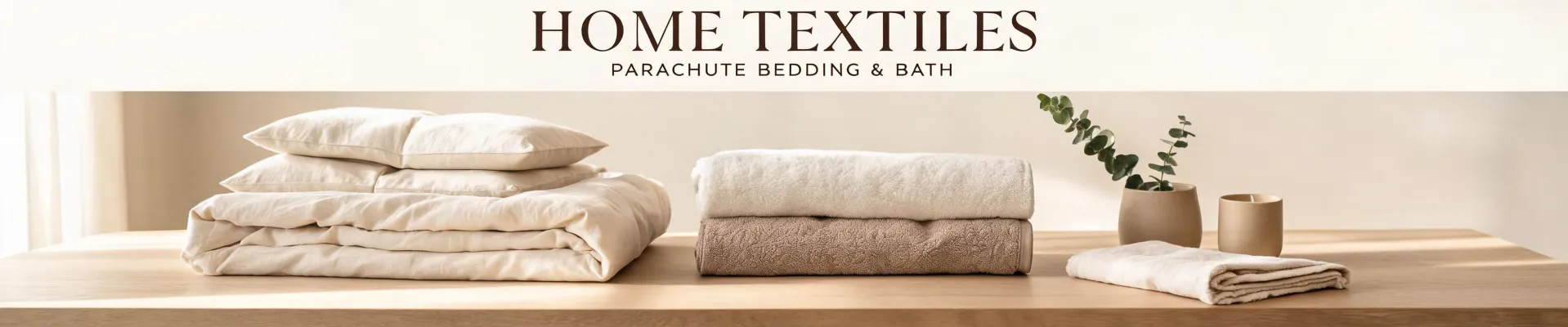
On a cool evening, the throw you reach for should be light, warm, soft, and able to hold up after many washes. Breathable, chemical-free fiber and durable construction are what make it earn its place—and Parachute's organic cotton line is designed for exactly that.
The Throw Test: What You Actually Do With a Blanket
Picture a cool evening when the couch calls and you reach for the throw that lives at the end of the sofa. That is the moment a blanket actually earns its place: light enough to feel effortless, warm enough to take off the edge, and soft enough to want against your skin. You are not thinking about fiber or weave yet, but the blanket you grab will be washed, pulled over shoulders, wrapped around a lap, and probably fought over on movie night. After a dozen cycles it should still hold its shape and stay soft, not pill into fuzz or shrink into a stiff rectangle. That is why material matters more than pattern or price tag. A throw that passes the nightly test is built on breathable, chemical-free fiber and a texture that stands up to daily use—and that is exactly the case Parachute's organic cotton line is built to make.
What makes a throw 'organic' worth paying extra for when a cheap synthetic version looks nearly identical from across the room? Start with what the brand itself leads with. Parachute's own site pairs its home collection with the line 'No chemicals. All comfort.' and that phrase is not decoration—it defines the condition under which a cotton throw becomes worth the investment. The same page offers 10% off your first order and up to 15% off bundles, but the positioning is telling: comfort first, chemicals never. When a company stakes its homepage on that message, it is signaling where its quality priorities lie, long before you read a fabric spec. The consequence for you is practical: organic cotton's benefit is fiber purity, not automatic softness, so the real test is whether the construction can keep that purity while surviving weekly washing. That question is exactly what separates a blanket you keep for years from one you replace next season.
Why Organic Cotton Changes the Throw Equation
That positioning matters because organic cotton changes the entire risk equation for something that sits against bare arms and faces. A conventional cotton throw can be treated with formaldehyde resins, synthetic softeners, or dye fixatives, and those residues are exactly the kind of thing you do not want rubbing into skin on a damp evening. Parachute's 'No chemicals. All comfort.' line is the cause; the effect is that their cotton pieces are framed around purity rather than just feel. The brand also pushes its organic plush collection as 'super soft' and trending, which signals that softness is being engineered into the weave, not sprayed on. The evidence does not say every Parachute throw is organic cotton, but it does show organic cotton is a recurring category commitment, from basics to resort stripes. For you, the cause-effect chain is straightforward: fewer chemical treatments in the fiber means fewer unknowns next to your skin, and that matters more than any single thread count.
Does a brand's marketing actually translate into a better blanket, or is 'organic' just a label slapped on the packaging? Check what the evidence does and does not show. Parachute's organic plush line is described as 'super soft' and trending, and its broader catalog repeatedly returns to cotton with no chemical language attached; the same official pages pair those claims with a comfort-first message. That pattern is a signal, not a guarantee: it tells you the brand has decided to compete on fiber purity and softness rather than on price alone. What it cannot tell you is whether a specific throw will feel right against your neck on a cold night. So the validation question becomes a threshold question: if a company's own materials keep talking about comfort without chemicals, the odds are better that its organic cotton is a real construction choice, not a marketing footnote. The effect is that you can move from 'is organic worth it?' to the more useful question of which construction will last.
What the Ribs Really Do: Construction, Drape, and Care
Watch out for the assumption that 'ribbed' automatically means a fabric that pills or a blanket that overheats; the texture itself is not the culprit. Ribbing is just a structural pattern where raised columns of knit trap small pockets of air, and those air pockets are what moderate temperature rather than smother it. Parachute's home collection includes pieces designed 'for cooler months & cozier sleep,' and that language points to the real effect: a mid-weight ribbed knit can hold warmth close without the heavy suffocation of a plush pile. Pilling and overheating are consequences of fiber quality and weave density, not the rib pattern. A loosely spun short-staple cotton will pill no matter what texture you knit; a tightly constructed organic cotton rib will stay smooth because the yarn itself is strong. So when you judge a ribbed throw, look at the twist of the yarn and the density between the ribs, not just the visual ridges. That distinction changes what you should feel for at the store.
How do you test a ribbed throw before you buy it, when the store lighting makes every blanket look soft? Run your hand against the rib, then across it, and pay attention to how much the fabric gives. A well-constructed rib should have a little stretch from the knit structure, but it should spring back rather than sagging open; the gaps between ribs should be even, and the hand should feel dense enough that you cannot see light through the weave. If the store has a floor model, give the hem a gentle tug and watch whether the ribbing distorts before settling back; a resilient knit will snap back into place, while a loose one will leave a wavy permanent line. Parachute's seasonal language about 'cooler months & cozier sleep' frames the intended use, and that context matters: a throw meant for layering on the couch does not need to be a winter-weight fortress, it needs to trap air without trapping sweat. Care instructions do the rest of the work—cold water and low heat keep organic cotton from shrinking and keep the rib pattern from distorting. When you apply that test to a candidate blanket, the consequence is immediate: you walk away with a piece that will still drape correctly after its twentieth wash.
Putting Parachute to the Test: What You Can Expect
Once you know the criteria, put Parachute on the table and look at what the evidence actually supports. The brand's own collection pages highlight up to 15% off bundles, which matters for a throw because you are likely buying it alongside sheets or towels—bundle pricing takes some of the sting out of paying for organic fiber. The same pages show organic cotton appearing across multiple categories, from Organic Resort Stripe to the organic cotton basics line, so organic is not a one-off single product story. That breadth is evidence of a system: a brand that invests in organic cotton across towels, bedding, and basics is more likely to apply the same fiber standards to a throw than one that drops a single 'organic' SKU for marketing. The caveat is equally clear from the evidence: none of these pages explicitly describe the ribbed throw's exact construction or thread count, so Parachute earns a strong yes on fiber philosophy and bundle economy, while the final judgment still rests on the hand test and care label of the specific piece you choose.
What should you do when the brand story lines up but the product page stays vague about weave density? Treat that as a coherence check, not a red flag. Parachute's official materials keep returning to the same vocabulary—'cooler months & cozier sleep,' 'organic resort stripe,' 'organic cotton'—and that repetition is the kind of internal consistency you want. If a brand talked about organic in one corner and then filled the catalog with chemical-heavy synthetics in another, you would rightly pause. Here the language across categories supports the same conclusion: organic cotton is a through-line, and the comfort positioning is not limited to a single collection. The effect is that you can shop the ribbed throw with reasonable confidence that the organic claim is part of a broader practice rather than a decorative buzzword. Just keep your own checklist handy: fiber certification on the label, yarn density in the hand, and care instructions that survive a read-through.
Your Decision Rule: Choosing the Right Organic Cotton Throw
Here is the decision rule that pulls everything together: choose a ribbed organic cotton throw when the label shows organic fiber, the rib construction feels dense and springy, and the care line matches the way you actually live. The evidence from Parachute's own official materials reinforces the first part—the brand leads with 'No chemicals. All comfort.' and repeats the organic cotton thread across categories—so you are not gambling on a one-off marketing claim. For the second part, the hand test replaces the thread-count obsession: if the ribs are even and the yarn is smooth and tightly twisted, the structure will hold up to washes. For the third part, be honest about your washing habits; a throw you will toss in the machine weekly needs cold-water construction, not a dry-clean-only temperament. Apply the rule in that order and the decision becomes nearly automatic: any blanket that fails the fiber test is out, any blanket that passes but feels flimsy is out, and the first one that passes all three is the keeper. That is a standard you can trust more than any single number on a tag.
Remember that cool evening when you reached for the throw without thinking? That unthinking reach is the final judge, because it is built from everything we have traced: fiber purity, rib structure, weave density, and honest care expectations. A blanket that earns that reach does not need to feel like a luxury statement; it just needs to be the thing you pull around yourself when the light fades and the air turns. The verdict is not about whether Parachute is the only brand that could satisfy the rule—it is about whether the piece you carry home can survive its first wash, keep its ribs even, and still make you reach for it again instead of the blanket next to it. When a blanket does that, the breathable, chemical-free fiber and the lasting texture are doing exactly what the thesis promised, and the guesswork is gone.

Leave a Reply