-
Does Parachute Home bedding and bath actually hold up? The short answer first
-
Which Parachute bedding line are you actually buying?
-
What about towels and the rest of the bath side?
-
Should you add one more item to hit the 15% bundle discount?
-
Before you trust a Parachute review, check which Parachute you are reading
-
The one rule to run before you check out
Parachute Home bedding and bath quality is a line-level question, not a brand-level score. The catalog is organized around names such as Brushed Cotton, Linen Tencel, Organic Plush and Cotton Drift on the bedding side, and Classic Turkish Cotton, Organic Resort Stripe and Organic Cotton on the bath side, so the smallest unit you can honestly compare is a line, not "Parachute." The same pages that list those names also list a 10% first-order code and up to 15% off bedding and bath bundles, and no durability figure, no test score and no cross-line comparison of any kind. That asymmetry is the answer.
Does Parachute Home bedding and bath actually hold up? The short answer first
That ceiling comes from what the official pages actually publish, and from nothing beyond it. Product and collection pages pair a line name with material wording — Brushed Cotton Sheets, Brushed Cotton Checks, Linen Tencel, Organic Plush, Cotton Drift, Down and Down Alternative, Ultraweight, plus utility protectors, mattress toppers and pads — and then attach sales language: 10% off your first order and up to 15% off bedding and bath bundles. Read the two columns side by side and the pattern is unmistakable. The descriptive side is qualitative; the numeric side is entirely about money. Nothing on those pages states a thread count, a shrinkage rate, a wash-cycle limit or a wear test. So when a shopper asks whether Parachute bedding holds up, the catalog can answer what a line is made of and who it is aimed at. It cannot answer whether one line outlasts another, and that is a statement about the evidence, not about the sheets.
Which raises the question every buyer eventually hits: if quality lives in the line name, which line am I actually buying when I drop a bundle in the cart? The trap is that most search results answer a brand question instead. One reviewer praises a towel, another complains about a sheet, and both get read as verdicts on the whole catalog. That reading fails the moment you notice the catalog is arranged as five or six distinct material stories with different care needs and different seasons. A hotel-crisp percale bundle and an Ultraweight duvet share no failure mode, no wash routine and no comfort profile. So the practical next question is the inventory question: what are the bedding lines, and which one belongs on your bed rather than in your guest room?
Which Parachute bedding line are you actually buying?
Work down the bedding side and the lines sort into recognizable jobs. Brushed Cotton Sheets are the soft, brushed entry point, and the Brushed Cotton Checks collection takes that direction into pattern under the line "More pattern, more fun." Linen Tencel is positioned as "Cool, calming, and now in new colors," which points at warm sleepers and warmer months. Organic Plush is flagged as trending and "super soft," the option for someone who wants surface softness over crispness. Cotton Drift arrives as "New, comfort without the weight," aimed at people who find a heavy duvet stifling. The quilts and comforters side splits into two fill paths: down, described as crafted from premium European white down, and Down Alternative, described as hypoallergenic microfiber and sustainable washed down from returned Parachute pillows. "Buttery. Breathable." leads the Percale and Linen bundle promotions, Ultraweight is framed for cooler months and cozier sleep, and Mattress plus Mattress Protectors round out the list as the page's self-described best seller.
Now the question that actually decides the cart: which of those lines matches how you sleep and how you do laundry? The material stories are not interchangeable, and the pages imply the mismatch by describing each line in one narrow register — breathable for one, cozy for another, lightweight for a third. If you sleep hot and you have ever woken up damp under a heavy comforter, the cooling and lightweight lines are where your money belongs, and the cozy line will disappoint you no matter how many stars its reviews carry. If you wash bedding weekly on a hot cycle and dry it hard, a delicate-feeling surface is the wrong target to buy. The useful pre-purchase question is not whether the brand is good, but whether a line's stated purpose matches the two or three conditions you actually live in.
Here is where the discount structure becomes a hazard rather than a perk. The official pages run a 10% off first-order code and bundle promotions at up to 15% off — 15% off bedding bundles, 15% off bath bundles, 15% off Percale bundles, 15% off Linen bundles. Those offers are organized by category, not by fit, so they reward buying more of a category and say nothing about whether the second and third items suit you. A shopper who sleeps hot but saves 15% by adding a heavy, cozy layer has bought a discount and a problem in the same transaction. The discount column is also the only column with numbers in it, which is precisely why it reads like a quality signal. It is not one. It tells you what the brand wants to move this season, not what will work on your bed for the next three years.
What about towels and the rest of the bath side?
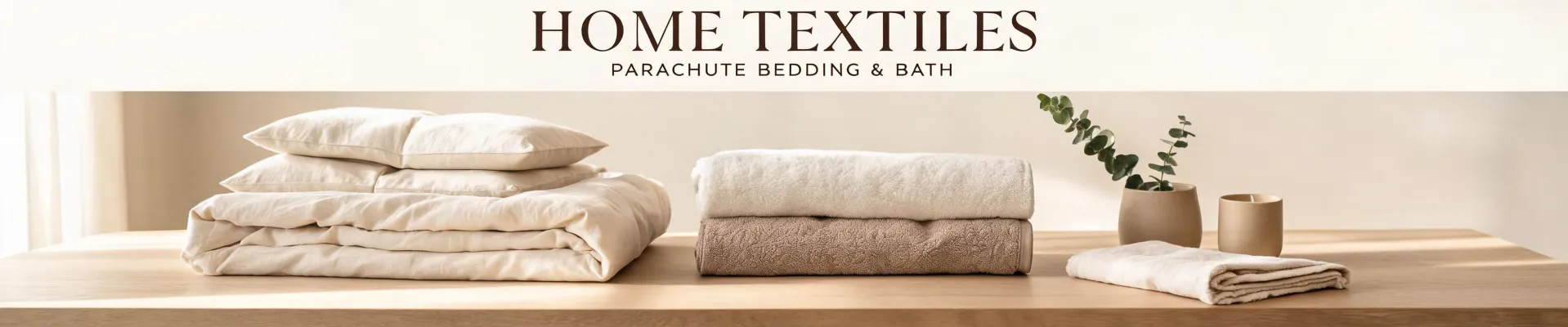
The bath side is narrower but follows the same structure. The towel and robe lineup names Classic Turkish Cotton, Organic Resort Stripe, Organic Cotton and the Casita Beach Towel, with the Cloud Cotton Robe covering the robe slot, and the descriptive header for the group is "Quick-Drying. Modern." That header matters more than it looks, because it tells you what the bath side is optimizing for: turnover and a clean visual line rather than a plush, heavy hand-feel. For a household running one load of towels a day and hanging them in a small bathroom, quick-drying is the property that decides whether towels still smell clean by Thursday. For someone who wants the thick, spa-style towel that stands up on its own, the same two words are a warning. Two shoppers reading identical copy should reach opposite conclusions, and that is the intended behavior of a line-level catalog.
Then there is the one bath SKU that carries hard numbers: Classic Turkish Cotton Towels in the Spa colorway are listed as FINAL SALE at $5.60 against an original price of $14.00. That markdown is the most tempting number on the page and the most misread. A final-sale flag marks an exit, not an entry: it says this specific colorway and SKU are being cleared, so availability will not be there next month and it cannot stand in as the general price of the line. It also says nothing about Turkish cotton as a material, because markdown depth at the end of a run reflects inventory math rather than construction. Read correctly, the $5.60 towel is a cheap way to sample the category if the label suits you and you accept that final-sale items do not come back. Read incorrectly, it becomes "six dollars buys me Parachute quality," which is exactly the misreading this walkthrough exists to head off.
Should you add one more item to hit the 15% bundle discount?
This leaves the cart decision, because you are probably standing in it: two bundle-eligible categories selected, a 15% bundle threshold in sight, and one small item that would push you over it. The component that resolves this is not another review but a match test run twice — once against your sleep and wash conditions, once against the line's stated purpose. The catalog gives you enough to run it. It names each line, describes behavior in plain adjectives such as buttery, breathable, quick-drying, soothing and lightweight, and groups discounts by category. What it never gives you is a cross-line ranking, so the test has to be built from those descriptors rather than borrowed from a star rating somewhere else. That is the only honest way to use the page you are actually on.
Run it in prose, one line at a time. If you sleep hot, the descriptors that matter are cool and calming, plus comfort without the weight — that is Linen Tencel and Cotton Drift — and the Percale and Linen bundle promotions sit directly behind those lines, so 15% off Percale bundles and 15% off Linen bundles align with your fit instead of fighting it. If you want surface softness and you will treat bedding gently, Organic Plush is the match. If you sleep cold and want weight, Ultraweight is framed for cooler months and cozier sleep. If you are choosing fill, the split is literal: premium European white down on one side, hypoallergenic microfiber and sustainable washed down from returned Parachute pillows on the other, and the page even asks which insert is right for you. If you launder towels daily in a shared bathroom, quick-drying is the entire purchase; if you want plush, this is where you stop and look elsewhere. The discount never appears on that list, and that omission is the point.
One question remains before any of this is safe to act on, and it is not a product question at all. You have spent the last few minutes assembling evidence from search results, roundups and review pages that all carry the same brand word in the title, and you have been treating them as a single pile. Most of them will describe the same catalog, but the pile is not guaranteed to be homogeneous: brand words get reused, and a domain is not a brand promise. So before you map your sleep temperature onto a line name, there is a cheaper check to run first. How do you know the material you just read is about the company that sells sheets, and not about something else wearing the same word?
Before you trust a Parachute review, check which Parachute you are reading
The check is domain ownership, and it matters because "Parachute" resolves to two unrelated companies. Bedding and bath live at parachutehome.com. At parachute.com, Parachute is a healthcare technology business: its own about page describes it as the infrastructure for home-based care, connecting healthcare providers, suppliers and payors in a shared digital network so patients receive equipment at home, and its front page titles it the network for home medical equipment. That site's subjects are order completeness, supplier documentation, insurance capture, EMR integration and delivery tracking — a world away from percale and Turkish cotton. When the two get mixed, the mix runs in one direction: a shopper reads about the nation's largest digital network for home medical equipment and unconsciously transfers that scale onto a duvet. Nothing on the equipment site says anything about weave or wash life, and nothing on the bedding site says anything about medical equipment.
The second half of the verification path concerns evidence quality, and the equipment site is useful here as a contrast. It documents workflow steps end to end — insurance and documentation captured upfront, AI-powered fax intake, suppliers requesting missing updates inside the platform, real-time order tracking and delivery confirmation — which is material a buyer could go and check against a process. The bedding pages are the opposite kind of material: brand-authored descriptions, promotional language and an occasional slogan such as "No chemicals. All comfort.," which is a statement of brand intent rather than a third-party test result. So the honest ceiling on any Parachute bedding and bath quality review built from those pages is what each line is made of and who it is aimed at. Anything stronger — durability rankings, multi-year comparisons, or measured worth-it verdicts — is not supported by the material the brand itself publishes.
The one rule to run before you check out
Pull the steps together and the decision reduces to a sequence you can run in a couple of minutes. First, name the line rather than the brand: identify whether the item in your cart is Brushed Cotton, Linen Tencel, Organic Plush, Cotton Drift, Ultraweight, down or down alternative on the bedding side, or Classic Turkish Cotton, Organic Resort Stripe, Organic Cotton or Cloud Cotton on the bath side. Second, test that line's stated purpose against your sleep temperature and your laundry habits, and accept the answer even when it conflicts with what the promotion is nudging you toward. Third, read the number you are reacting to and ask which side it sits on — the 10% first-order code, the up-to-15% bundle discounts and the $5.60 final-sale towel are all pricing facts, and none of them describes how an item is built. A verdict that does not survive those three steps is a brand impression, not a buying decision.
That sequence yields a rule short enough to check while the cart is open. The bundle offers — 15% off across bedding, bath, Percale and Linen — decide what you pay; the line name decides whether the purchase was worth paying for at all. So the order matters: match the line first, then let the discount choose between two options you would already buy without it, and never let it pull a line into the cart that failed the match test. That rule also tells you when to walk away, which no summary can. If the only reason an item is sitting in your cart is that it closes a 15% gap, take it out — the total you land on afterwards is the honest price of the fit you actually need.
Parachute Home does not publish a quality score, and no review can manufacture one from material the brand never released. What the catalog does publish is a set of named lines, each described in one narrow register, sitting beside a discount column that is the only place numbers appear. Read the lines first, match one to the way you sleep and wash, and treat every price you see — the first-order 10%, the up-to-15% bundle offers, the $5.60 final-sale towel — as a statement about the transaction rather than about the product. Do that and the question shifts from whether Parachute is good to whether a specific line is right for a specific bed, which is the only version of the question the evidence can actually answer.

Leave a Reply