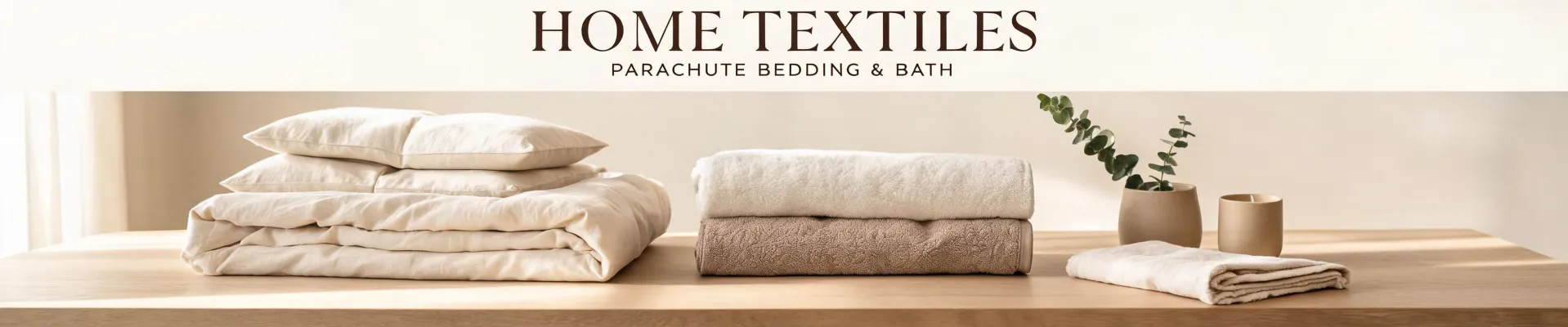
Sunlight angles across the living room as you slide the box open. Inside is a folded square of fabric—the Parachute Organic Cotton Ribbed Throw—and the first surprise is the weight. It's lighter than you assumed for something described as a blanket. You shake it out, and the ribs catch light in a way that makes the surface feel like a seaside boardwalk rather than a plush comforter. A dry, crisp texture runs under your fingers, and the cotton has a clean, unperfumed smell. You drape it over the arm of the sofa, and it falls into place easily, holding a crisp vertical line. This isn't a blanket that huddles; it's one that stands. But the tactile first impression only sets the question: is this a decorative layer for a chilly corner, or a defensible all-season textile? The full answer requires understanding the weave, the care, and the price.
The First Unwrap
Press your palm flat against the ribs and you feel a sequence of small ridges that move like a topographic map under your skin. The cotton is dense enough to hold a crease but flexible enough to recover from a fold. There's a faint crispness, like a well-ironed shirt, that makes you want to know what a night in the dryer will do to it. You look for a loose thread and find none, which is a small reassurance. The label lists fiber content and care symbols, but it doesn't say how the blanket will behave on a humid night or how the ribs will survive a season of folding. So you set a mental scorecard: material, construction, care, versatility. Everything else—the brand, the color, the organic claim—has to earn a place on that list before the blanket earns a place in your home.
But the purchase question is not whether it feels nice, but whether this blanket deserves a spot in your cart or only a label stacked with marketing claims. Parachute’s own pages offer the first set of clues: 10% off a first order, up to 15% off bundles, and the repeated phrase 'No chemicals. All comfort,' alongside organic cotton pushed across product lines. The promo numbers pull you in, nudging the price down from what you’d pay on a design site—if you’re willing to add a duvet or towels to the same checkout. But as evidence, the discounts tell you what it costs on a good day, not how the fabric endures. More compelling is the material claim; a brand that puts organic cotton into sheets, towels, and even decor is signaling a repeatable production standard, not a one-off label. That’s an argument about growing practices, though, not weaving or washing. Keep this in mind: trust the 10 and 15 percent as a signal of good pricing, trust the organic label as a signal of responsible sourcing, but wait until the yarn has been laundered and lived in before claiming the blanket as a keeper.
What the Rib Actually Does
Flip the blanket over and the label is sparse, but the brand catalog provides a thicker clue. Browse Parachute’s collection and you see organic cotton repeated across sheets, bath towels, and decor; that consistency hints at a supply chain larger than a single throw. It suggests the fiber standard is a company default, not a seasonal gimmick. Organic certification chiefly concerns farming—no synthetic pesticides, controlled bleaching, soil practices managed rather than chemistry-driven. That means the fiber should feel clean against your skin and is less likely to stir up residues left by more processed cottons. But none of that automatically translates into shrink-proofing or pill-resistance. Read the label with a farmer’s mindset, not a launderer’s: the certification is about growing, not about how the fabric will survive a hot dryer. The ribbed weave itself is where the practical performance begins, and that’s where this field guide turns its attention.
The ribbing itself makes its case. When cotton is woven into tight vertical ribs, the fabric gains structure; small raised ridges alternate with tiny air pockets between the fiber strands. Each pocket traps some body heat, creating a mild insulation, but the open channels mean air still moves, so you don’t get the vacuum-sealed feel of a plush fleece or a dense waffle knit. That’s why it lands in between: in a sixty-degree room it holds just enough warmth to keep your knees comfortable, but it won’t make you sweat the way a chenille throw can. On a warmer night with the air conditioner running, the same ribbed layer puts a thin barrier between your skin and the chilled air without trapping moisture. The effect works in both directions. The ribbed construction also buys you an advantage that loose flat weaves don’t: it holds its shape better than a soft brushed throw, because the vertical ridges settle back into place after repeated folding rather than becoming a lazy nest.
So, you ask, is it really warm enough for winter? The answer depends on how you define winter. If you plan to huddle in an unheated house during freezing nights, no, it won’t be; you want a heavy sheepskin or down blanket there. But in a standard heated house, winter living rooms sit around sixty-eight degrees, and this throw works: it covers your stationary legs, slows heat loss, and doesn’t make you feel like you’re under a wet sail. The real shortfall is weight, not temperature—it’s made to keep your shoulders warm without burdening them. That in-between weight means you can move it to the bed without guilt, because it’s not the kind of duvet you wake up ready to kick off. If you’re looking for a year-round replacement rather than a heavy winter cover, this is a rational alternative.
Care and Real-Life Wear
Now look at the tag and talk about actual care, because the word 'organic' doesn’t protect you from shrinking. Cotton is cellulose, and it tends to contract under vigorous washing and high heat; the ribbed structure actually makes that more visible, since the ridges pull tight and give the fabric a puckered look before it stretches back out. The brand might offer gentle wash instructions, but you shouldn’t expect the blanket to come out of the wash looking like it did on day one. Most cotton fabrics shed some lint in the first wash; any cotton yardage will pill when dragged against rough denim or laundered with a zipper. This isn’t a defect specific to this textile—it’s the condition of all natural cotton, especially when woven into a thicker rib. The real warning is about the maintenance rhythm: treat it carefully and it will improve; treat it badly and it can age quickly into something tired before its time.
So you have to ask yourself if you can accept the condition: cold water, gentle cycle, air dry or low heat—a gentler routine than your default. If you’re the kind of person who loads everything into hot water on a Friday, this throw will punish you. If you have the patience to wash it on its own and check the dryer before it overdries, it’s not a burden. The key is not permanent treatments, but willingness to treat this textile with a bit more care than your gym towels. It’s not that the blanket is fragile; it’s that the payoff of that structure—the ribs that hold their line—depends on how you dry it. Hang it flat and the ridges stay defined; machine-dry on high and the cotton contracts, the ribs crowd together, and the drape turns stiff. That care level is worth it only if you want a throw you notice and enjoy, rather than an indestructible layer you fling around.
If you let it, the effect is positive but subtle. After a few washes, the ribs soften; that initial stiffness turns into a more drapey hand, while the airy texture of the ridges stays intact. Since cotton is absorbent, the throw doesn’t acquire the greasy feel that synthetics can; it wicks moisture before releasing extra heat. If you follow the hang-dry route, you get a blanket with softer edges and slightly faded color depth, but still structurally sound. When you do slip it into the dryer on low, it comes out with a bit more shrinkage—perhaps a few percentage points shorter—and a denser hand; still usable, but it loses the drape. So the verdict on care is: don’t overthink it, but don’t ignore it either. Treat this blanket like a good cotton shirt: wash it right and it stays looking deliberate; treat it like a duvet cover you don’t care about and it will look like one.
Styling It Beyond the Sofa
Suppose the living room gets the afternoon sun, as in the opening. You drape the ribbed throw over the sofa not for warmth but for composition: the ribs catch the light, giving a subtle visual depth that a flat weave doesn’t have, so the eye moves along the ridges. Fold it over the arm of a chair and it forms a clean vertical line. Lay it across the foot of the bed to add a layer of texture over slippery sheets. On a late-spring evening, you pull it over your lap while the AC is on, when the roof has cooled but the room hasn’t yet. This is where the ribbed weave earns its keep: the same ribs that read as texture are the ones that keep it from sliding off your lap in a heap. The throw’s job isn’t to be a tent; it’s to be a regulator—a useful piece of fabric you can toss aside without guilt.
These uses challenge the assumption that a ribbed throw belongs only to winter. In spring, when windows crack open and nights turn cool, the throw’s weight suits the season better than a heavy wool does. In summer, under the air conditioner, it acts as an air barrier that buffers overcooling without clinging to your skin. In September, before the heat comes on, it’s the first layer you grab for the sofa. The real category error is thinking of ribbed cotton as either feather-light or permanently cozy; its true category is the bridge between light and heavy. If you live in a mild climate with few extreme cold snaps, this throw can live on the back of a chair for months at a time, moving between seasons without being put away. In a colder climate, it works as a summer-weight layer—not a substitute for insulation, but a continuous medium for the in-between months.
The Verdict, Tied Back to the Unwrap
The buying logic becomes clear. Price matters: Parachute’s own materials offer 10% off a first order and up to 15% off bundles, so the throw gets cheaper if you pair it with a duvet or bath towels. But the discount exists only on that first purchase, so it isn’t enough on its own. What ultimately decides is whether you accept the in-between role: you want a blanket you’ll use for most of the year, not a heavy throw reserved for a single season. If you’re looking for a plush mantle for the coldest nights, this ribbed cotton will disappoint. If you want a layer that feels natural under the AC, works as a knee blanket in spring, and keeps its shape year-round, it matches. Buyers who prize convenience will find the cold-water, low-heat routine annoying, and they’d be better served by a synthetic fleece that shrugs off the dryer. That verdict isn’t harsh; it’s precise. Know what this throw is, and you’ll stop asking what it isn’t.
So, should you buy it? Yes, if you want a blanket that sits between light and warm, handles the AC, and doesn’t mind being folded on a chair. The care routine is manageable for anyone who already washes their good sweaters by hand. The organic cotton story is nice, but the weave is the real reason to choose it—the ribs that make it breathable and shape-holding. It is not a winter-only throw, and it is not a plush one; it is the throw you will reach for when the weather doesn’t know what to do. The weight feels right, the texture doesn’t fight you, and the care routine fits your life. The blanket may not be a hero piece for a sudden blizzard, but it earns its place as the layer that makes the in-between days comfortable. That is the quiet reason it stays on the sofa.
Back at the sofa, the throw still sits where you left it. The ribs catch the light as they did when you first unpacked it. It is not the thickest or the softest blanket you own, but it is the one that seems to understand the in-between days, and that competence is why it stays.

Leave a Reply